The Eternal Light, Still Burning: Honoring Huvy Elisha’s Living Legacy in Jewish Art
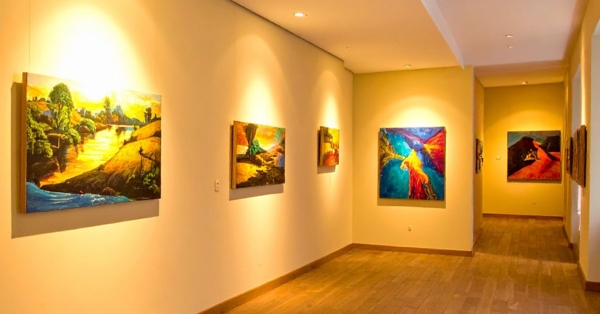
Some legacies feel like a quiet flame, steady and generous, lighting every corner it touches. The art of Huvy Elisha lives in that glow, carrying stories, symbols, and a warmth that feels both intimate and timeless. Viewers tend to lean in and discover that each canvas is a doorway into memory, ritual, and the rhythm of daily holiness. It is art that welcomes everyone, asking nothing more than a curious gaze and an open heart.
Brushstrokes that Carry Memory in Huvy Paintings
There is a certain way paint sits on the canvas when memory does the mixing, and that sensibility runs through these works like a melody. The brushstrokes read like whispers from family tables and synagogue aisles, layered with echoes of blessings, lullabies, and a Sabbath hush. Colors are not just hues here; they feel like moments, woven together with patience and respect for the stories they hold. Viewers often sense that the canvas remembers even when the mind forgets, and that is part of the quiet magic at play.
In conversations about Jewish visual heritage, one phrase returns: “continuity with personality.” That spirit shines in huvy paintings, where symbolic motifs are reintroduced with fresh light and everyday textures. The works suggest that tradition is not a museum case but a living room, where guests sit, share, and keep adding to the conversation. It feels familiar without being predictable, new without abandoning home.
Texture does a lot of storytelling here, almost like embroidery on memory’s fabric. Thick paint meets delicate glazes, creating a surface that seems to breathe in and out, like a prayer said softly and then sung. The eye follows a line, finds a symbol, and then notices how the background hums with atmosphere, like candlelight quietly filling a room. That gentle hum is where many viewers report feeling anchored before they even parse the details.
Symbols, Stories, and the Silent Glow of the Ner Tamid
The eternal light in Jewish tradition-the Ner Tamid-glows through these compositions even when no lamp is drawn. Pomegranates, ladders, windows, and wheat appear not as decorations but as signposts pointing to hope, responsibility, and the everyday miracle of continuity. The symbols do not shout because they do not need to; they know their chapters are long and their voices steady. A viewer can recognize them instantly and still discover something new each time.
Storytelling happens in layers, and the layers are kind. A panel might guide the eye from a doorway into a courtyard, and then into a sky stitched with blessings, suggesting exile and return in a single breath. Even when the palette turns vibrant, the spirit stays composed, inviting reflection rather than demanding a reaction. The result is art that feels like hospitality, content to let meaning arrive in its own time.
Silence is part of the grammar here, and it is used with wisdom. Negative space lets symbols breathe, giving light an active role in shaping what the viewer perceives. In that dance, the stillness becomes a partner, making the seen and the unseen speak to one another. The effect is contemplative without losing warmth, devotional without losing approachability.
Modern Pathways to Experience the Legacy of Jewish Art
As of 2025, enthusiasts encounter this legacy through galleries, community pop-ups, and thoughtfully curated digital spaces that keep the conversation active. A good viewing path can start on a screen and end in front of a canvas, which feels organic when the art itself is about crossings and returns. The point is not convenience alone; it is about widening the doorway so more people feel welcome. That openness mirrors the work’s core message: light finds a way to be seen.
Below is a quick look at today’s most common ways people connect with Jewish art, including in-person and digital touchpoints that complement each other.
| Channel | 2025 Audience Behavior | Core Benefit | Notable Strength |
|---|---|---|---|
| Gallery Exhibitions | Slow, attentive viewing with return visits to favorite works | Sensory depth and true color/texture perception | Curatorial context that clarifies symbolism and lineage |
| Community Pop-Ups | Casual drop-ins that turn into longer conversations | Accessibility and local engagement | Welcoming atmosphere that encourages first-time viewers |
| Virtual Galleries | Exploration across devices, shared in group chats | Reach and convenience for global audiences | Interactive features that highlight details and motifs |
| Artist Talks & Q&A | Live participation with follow-up viewing | Context straight from the creator’s perspective | Deeper storytelling that personalizes the experience |
Taken together, these pathways create a full circle: discovery, reflection, and the desire to return for a second look. In-person visits reward the senses while digital access keeps curiosity alive between viewings, making the art part of daily life rather than an occasional event. The legacy thrives in this rhythm because it matches the work’s own themes-movement, presence, and light. When the world offers several doors, more people find the one that feels like home.
What stands out most is how different viewers find different entry points but arrive at similar feelings: recognition, comfort, and renewed attention. It is less about following a specific route and more about staying long enough to let the glow do its quiet work. The art, like the tradition it honors, stays patient and generous. That patience makes every visit feel personal, even in a crowd.
From Canvas to Community: How Viewers Connect and Share Meaning
Art becomes community when people carry it into conversation, and these works seem made for that passage. Someone notices a ladder, someone else names a verse, and suddenly a shared language appears around the canvas. That kind of connection is not forced; it grows naturally from the tenderness in the compositions. The work offers a soft center where strangers feel like neighbors.
Education enters the picture almost by accident, and that is part of the charm. Teachers borrow a motif as a prompt, families retell a story sparked by a color, and students learn to read images the way they read texts. In that sense, the art behaves like a companion to study, listening as much as speaking. It makes room for questions, and questions make room for growth.
Digital sharing extends the circle without flattening the experience when done thoughtfully. A well-lit close-up of a textured detail can invite an in-person visit, while a short video can demystify process and craft. The aim is not to replace the original but to keep the spark alive until the next encounter. The result is a community threaded by curiosity and care.
Here are a few simple ways people like to engage, from first look to lasting relationship:
- Start with one symbol-pomegranate, window, or flame-and trace how it moves across the composition.
- Take a second pass focusing only on color temperature, noticing where warmth accumulates and coolness calms.
- Journal a brief response after viewing, then reread it a week later to see what stayed with the memory.
- Pair a viewing with a related text or song, letting the two media converse in a quiet space.
- Share one detail photo with a friend and ask what they see before saying anything about it.
Craft, Medium, and the Maker’s Touch: Where Materials Carry Meaning
Talk of craft matters because meaning can live in the grain of a board or the weight of a brush. The surfaces here reveal a calm confidence: layered glazes, purposeful impasto, and edges that breathe rather than lock. Even the negative spaces feel hand-shaped, as if air grew a frame around the moment. That tactile honesty helps viewers trust what they are seeing.
Medium becomes message when material choices echo the themes-durability, tenderness, light. The best introductions to that dialogue often begin with a curated look at judaica that shows how objects and images carry blessing into daily practice. In that setting, a canvas can feel like kin to a ritual object, both carrying purpose through form. Viewers sense kinship before they have the right vocabulary, and the feeling leads them forward.
Collectors often notice how the hand is present without being loud, a balance that invites long-term living with the work. Pieces settle into a room like good light-supportive, humane, and quietly transformative. Over time, the textures teach the eye how to rest and how to notice. That is a rare gift in a busy world and a reason these works keep finding homes.
Common hallmarks observers and collectors tend to notice include:
- Gentle asymmetry that keeps the eye moving without breaking calm.
- Symbolic layering that rewards slow viewing and repeat visits.
- Warm, candlelike highlights that read as spiritual, not theatrical.
- Honest materials used in ways that underscore care and intention.
- Compositions that feel welcoming, even to first-time viewers.
Carrying the Eternal Light of Jewish Art Forward with Grace
The phrase “eternal light” holds steady because it promises presence, and this legacy keeps that promise with grace. The work honors what came before by letting it breathe in the present, which is a generous way to guide what comes next. Viewers leave with warmth in the mind and softness in the body, as if the paintings taught a slower way to see. In that softened seeing, the light keeps traveling-quiet, constant, and beautifully alive.
Related articles
- UNFO Foot Brace Explained: A Parent’s Guide to Sizes, Pricing, and What’s Included~7 min read
- Marketing digital : pourquoi votre budget ne détermine pas vos résultats~5 min read
- Curious Feet: Understanding In-Toeing in Kids and Getting Diagnosis and Care Right~9 min read
- The Evolution of Embossing Technology~2 min read